


Tea is supposed to be one of the healthiest and most comforting parts of your day. You choose better tea leaves, better water, and better brewing methods—but what about the cup itself?
That is where many people overlook an important detail.
Not all porcelain teaware is made with the same level of care. Some cheap porcelain products on the market today may be made with low-quality raw materials, unstable glazes, or poorly controlled chemical colorants. They may look beautiful at first glance, but the real issue is what goes into the clay, the glaze, and the firing process.
If you drink tea every day, your teaware matters more than you think.
Stop Drinking Tea from “Toxic” Porcelain
Tea is supposed to be one of the healthiest and most comforting parts of your day. You choose better tea leaves, better water, and better brewing methods—but what about the cup itself?
That is where many people overlook an important detail.
Not all porcelain teaware is made with the same level of care. Some cheap porcelain products on the market today may be made with low-quality raw materials, unstable glazes, or poorly controlled chemical colorants. They may look beautiful at first glance, but the real issue is what goes into the clay, the glaze, and the firing process.
If you drink tea every day, your teaware matters more than you think.
Why Material Quality Matters
Porcelain starts with the raw material. If the clay is poor, the final product will never truly be excellent, no matter how decorative it looks on the outside.
High-quality porcelain is typically made from carefully selected natural mineral clay, often including kaolin-rich materials known for their purity, smoothness, and durability after firing. Better raw materials create a cleaner, denser, and more refined porcelain body.
By contrast, lower-end products may rely more heavily on mixed materials or less refined clay in order to reduce costs. That difference may not always be obvious at first, but it often shows up over time in the feel, finish, durability, and overall quality of the piece.


The Advantage of High-Temperature Firing
One of the biggest differences between cheap porcelain and fine porcelain is the kiln temperature.
High-fired porcelain is typically fired at very high temperatures, often around or above 1200°C. This process is essential because it transforms the clay into a harder, denser, more stable material. Just as importantly, high firing helps burn off moisture, organic residue, and many unwanted substances left in the raw body.
That is why high-temperature porcelain is so highly valued.
It is:
denser and less porous
more durable for everyday use
more heat-stable
smoother and more refined in texture
better able to maintain the purity of tea flavor
When porcelain is properly high-fired, the glaze matures more fully, the body becomes stronger, and the finished piece is more stable overall. For daily tea drinking, that gives you a cleaner and more dependable experience.
Why Handmade Jingdezhen Porcelain Stands Apart
If you are looking for porcelain that reflects real craftsmanship, Jingdezhen is one of the most respected names in the world.
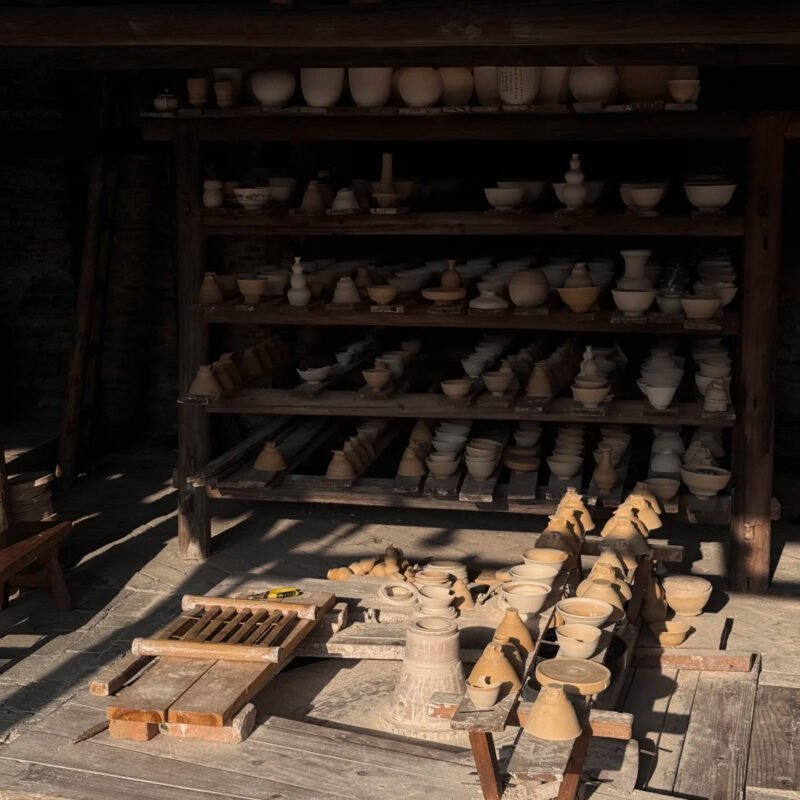
Known as the historic home of Chinese porcelain, Jingdezhen has been producing fine ceramics for centuries. What makes handmade Jingdezhen porcelain special is not just its beauty—it is the combination of natural materials, skilled handcraft, and high-temperature firing.
Compared with many inexpensive mass-produced products, handmade Jingdezhen porcelain offers several important advantages.
Natural Clay
Many handmade Jingdezhen pieces are made from carefully selected natural clay materials. This gives the porcelain a cleaner body, a more delicate texture, and a stronger foundation from the very beginning.
Each piece reflects the attention of an artisan—from shaping and trimming to painting and finishing. That level of care creates not only a more beautiful object, but also a better one.
High-Temperature Kiln Firing
This is one of the most important advantages. High firing helps remove many unwanted impurities, strengthens the porcelain body, and creates a more stable finished product for tea use.
A Better Tea Experience
Well-made porcelain does not distract from the tea—it supports it. Handmade Jingdezhen porcelain is often smoother, finer, and more balanced in the hand, while also preserving the clean taste and aroma of tea.
Lasting Value
A cheap cup may cost less today, but a finely made porcelain tea set brings lasting value, both in daily use and in long-term appreciation.


Good Tea Deserves Better Teaware
A lot of people spend money on premium tea, then brew it in the cheapest cup they can find. But tea and teaware work together. If you care about quality, comfort, and the overall ritual of tea, your cup should reflect that same standard.
Choosing well-made, high-fired handmade porcelain is not just about style. It is about confidence in the materials, trust in the craftsmanship, and a better experience every time you brew.
That is one of the reasons so many tea lovers are turning back to traditional porcelain—especially handmade Jingdezhen porcelain, made from natural clay and fired at high temperature.
Final Thoughts
Not every inexpensive porcelain cup is automatically bad, but the reality is that quality varies widely in today’s market. Some low-cost products may be made with poorly controlled materials, questionable chemical inputs, and firing methods that do not fully bring out the strength and purity porcelain should have.
Handmade Jingdezhen porcelain offers a different path.
It is rooted in natural clay, shaped by skilled artisans, and refined through high-temperature firing that helps remove many unwanted substances while creating a stronger, cleaner, and more stable piece of teaware.
If you truly care about your tea, do not overlook the vessel.
Because better tea begins with better porcelain.


FAQ
- Is cheap porcelain always unsafe for tea?
Not always, but quality can vary a lot. Some low-cost porcelain may be made with lower-grade materials or inconsistent firing methods. That is why it is important to buy from trusted makers who are clear about their materials and craftsmanship.
- Why is high-fired porcelain better for tea?
High-fired porcelain is denser, more stable, and less porous. The high-temperature kiln process helps reduce impurities in the clay body and creates a smoother, stronger surface, making it better suited for hot tea and daily use.
- What makes Jingdezhen handmade porcelain special?
Jingdezhen porcelain is known for its natural clay, traditional craftsmanship, and high-temperature firing. These qualities give it a refined texture, lasting durability, and a cleaner, more authentic tea experience.