


Jingdezhen has long been known as the porcelain capital of China, a city where ceramic tradition, craftsmanship, and artistic heritage have been refined for over a thousand years. Behind every handmade Gaiwan, teacup, and porcelain tea set lies a long and delicate process that combines technical skill with artistic dedication.
For tea lovers, a Gaiwan is more than just a brewing vessel. It is a symbol of Chinese tea culture, elegance, and ritual. When that Gaiwan is handmade in Jingdezhen, it also becomes a work of art shaped by many experienced artisans, each specializing in a different stage of porcelain production.
In this article, we take a closer look at how a handmade Jingdezhen Gaiwan is created, from clay shaping to final firing.
1. The Beginning: Shaping the Porcelain by Hand
Every handmade Gaiwan starts with raw clay. The first stage is shaping, where the porcelain body is formed on a pottery wheel by a skilled craftsman. This process demands excellent hand control, balance, and a deep understanding of the material.
Unlike mass-produced tea ware, handmade porcelain is never entirely identical. Slight differences in line, curve, and proportion give each Gaiwan its own character. After the initial shaping, the piece is left to dry until it reaches the right firmness for trimming.
Trimming is another essential part of the process. At this stage, the artisan refines the profile of the Gaiwan, adjusts the thickness, smooths the foot, and perfects the lid and bowl proportions. A well-made Gaiwan must feel balanced in the hand, pour cleanly, and sit comfortably during tea brewing.

2. Drying and the First Firing
Once the porcelain body has been shaped and trimmed, it must dry completely before entering the kiln. Drying may seem simple, but it is a sensitive stage. If moisture remains unevenly in the clay, the piece may crack or deform during firing.
After drying, the Gaiwan undergoes its first firing, often called bisque firing. This is usually done in an electric kiln at around 800°C. The purpose of this firing is to harden the clay body and prepare it for decoration and glazing.
At this point, the once fragile clay has become a stable ceramic form, ready for the next artistic stage.
3. Painting the Underglaze Design
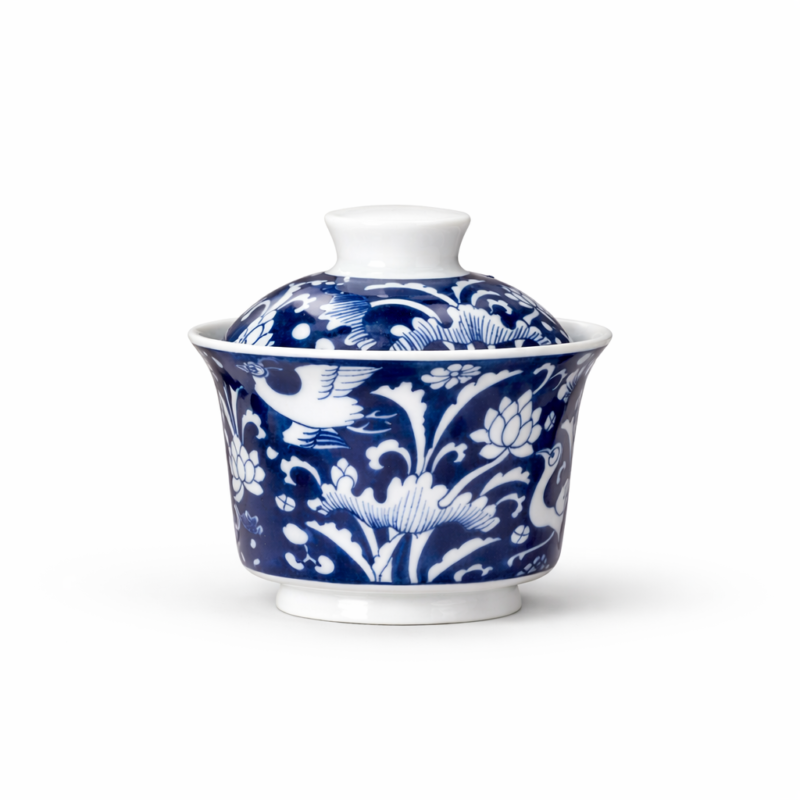
For many traditional Jingdezhen porcelain pieces, decoration begins with underglaze painting. One of the most famous styles is qinghua, also known as blue and white porcelain. In this method, the artist paints cobalt blue designs directly onto the bisque-fired porcelain.
A handmade Gaiwan decorated in qinghua often features classic Chinese motifs such as flowers, landscape scenes, birds, bamboo, lotus, or abstract brushwork. Because the pigment is painted before glazing, the artist must work with extraordinary precision. The final color will change during high-temperature firing, so experience is essential.
This stage highlights one of the most beautiful aspects of handmade porcelain: collaboration. The potter forms the piece, but the painter gives it personality and visual soul.

4. Glazing the Gaiwan
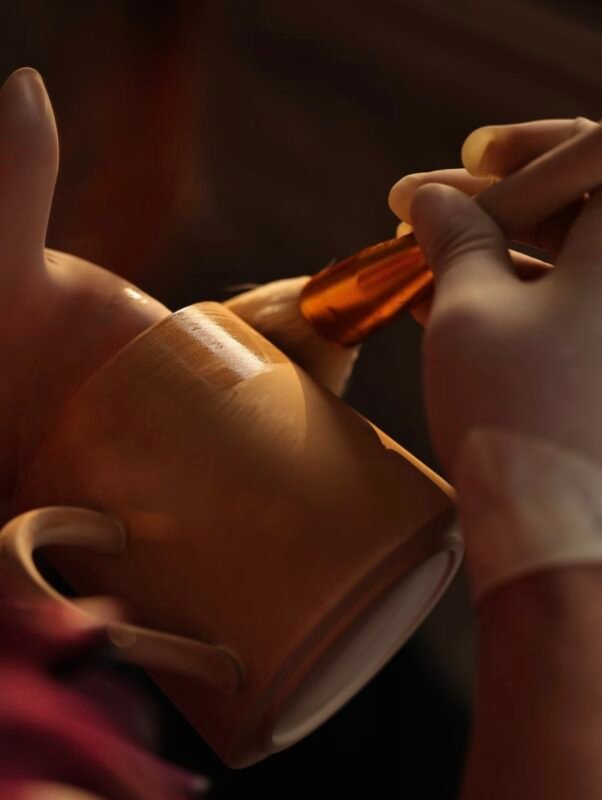
After the underglaze painting is complete, a thin, even layer of glaze is applied over the porcelain surface. This transparent glaze protects the artwork while giving the finished Gaiwan its smooth texture and luminous appearance.
Glazing is a subtle and highly technical step. If the glaze is too thick, the design may lose sharpness. If it is too thin, the surface may appear dry or uneven after firing. A well-glazed Gaiwan should feel silky, look bright, and enhance the painted design beneath it.
For tea drinkers, glaze also matters in function. A properly glazed porcelain Gaiwan is easy to clean, does not retain old flavors easily, and allows the true aroma of tea to shine.
5. High-Temperature Firing: The Critical Transformation
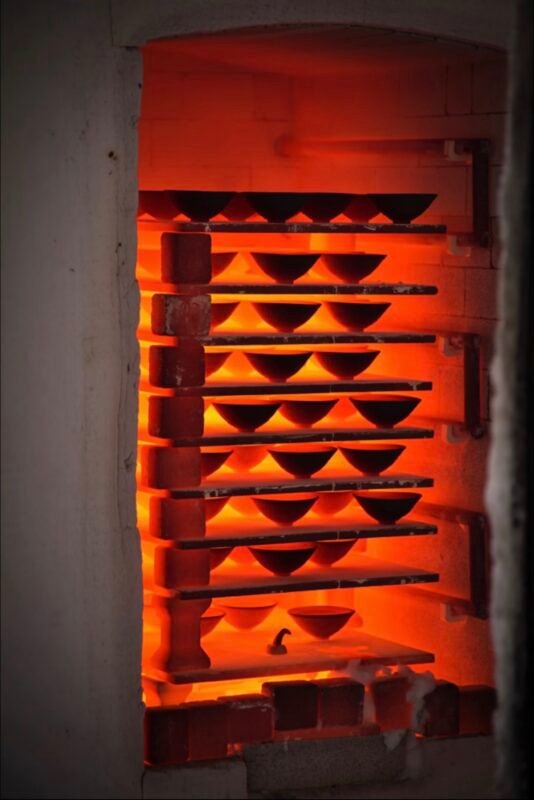
Once glazed, the Gaiwan enters the kiln for its high-temperature firing. This is one of the most important and risky parts of the entire process. In Jingdezhen studios, artisans may use gas kilns, electric kilns, or wood kilns depending on the desired effect.
The main firing for porcelain usually reaches around 1300°C and lasts 18 to 20 hours. At this temperature, the body vitrifies, the glaze melts, and the painted decoration becomes fused beneath the surface.
This is also the stage where failure can happen. Even a beautifully shaped handmade Gaiwan may warp, crack, or collapse in the kiln if there are small structural inconsistencies. High-temperature firing reveals every hidden weakness in the clay body.
Wood firing is especially admired for its rich and organic surface qualities. Some tea enthusiasts describe wood-fired porcelain as having a warmer, softer, even slightly “oily” look. However, wood firing is much harder to control, and the scrap rate is higher. That unpredictability is part of both the challenge and the beauty of handmade Jingdezhen porcelain.
6. From Qinghua to Doucai: Adding Overglaze Colors
If the porcelain piece is a classic blue and white Gaiwan, the high-temperature glaze firing may already complete the work. But for more complex decorative styles such as doucai, the process continues.
Doucai porcelain combines underglaze blue outlines with overglaze enamel colors. After the first glaze firing, artists paint additional colors such as red, green, yellow, or pink over the glazed surface. This stage requires another layer of artistic skill, as the painter must work delicately on the glossy surface without disrupting the balance of the design.
The Gaiwan then undergoes a final lower-temperature firing, usually around 850°C for 3 to 4 hours. This fixes the enamel colors onto the glaze and completes the doucai decoration.
The result is a richly layered porcelain piece with both depth and vibrancy, blending structure, color, and traditional technique into one finished object.
7. Why Handmade Gaiwan Matters
In today’s market, machine-made tea ware is easy to find. Yet a handmade Gaiwan from Jingdezhen offers something entirely different. It reflects the touch of the maker, the judgment of the painter, and the transformation of fire.
A handmade Gaiwan is not only practical for brewing tea. It also carries a sense of rhythm and ceremony. The lid fit, bowl curve, rim thickness, glaze feel, and pouring balance all influence the tea experience. For many tea drinkers, using a handmade porcelain Gaiwan makes each session feel more intentional, calm, and connected to tradition.
Because of the labour-intensive process, no two handmade pieces are exactly alike. That uniqueness is one of the reasons collectors and tea lovers value Jingdezhen porcelain so highly.
8. The Living Tradition of Jingdezhen Porcelain
What makes Jingdezhen special is not only its history, but also the fact that its traditions are still alive today. In many local studios, artisans continue to shape, paint, glaze, and fire porcelain using methods passed down through generations.
A handmade Gaiwan from Jingdezhen represents this living heritage. It is where ancient ceramic knowledge meets modern appreciation for tea culture and craftsmanship. Whether decorated in qinghua, doucai, or other traditional styles, each piece tells a story of patience, precision, and beauty.

Final Thoughts
From the first turn of the wheel to the final kiln firing, the making of a Jingdezhen Gaiwan is a complex and deeply human process. It involves multiple stages, multiple artisans, and countless decisions that shape the final result.
When you hold a handmade Gaiwan in your hands, you are holding more than porcelain. You are holding the skill of the potter, the artistry of the painter, and the centuries-old spirit of Jingdezhen.Shop
For tea lovers who value authenticity, beauty, and tradition, a handmade Jingdezhen Gaiwan is more than tea ware. It is an experience, an artwork, and a timeless part of Chinese tea culture.https://zenofclay.com/product/horse-hoof-gaiwan-chinese-tea-set/
FAQ
FAQ
1. What is a Gaiwan?
A Gaiwan is a traditional Chinese tea brewing vessel made up of a lid, a bowl, and a saucer. It is widely used for brewing loose leaf tea and is especially popular among tea lovers who appreciate precision, aroma, and the elegance of Chinese tea culture.
2. Why is a handmade Jingdezhen Gaiwan special?
A handmade Jingdezhen Gaiwan is valued for its craftsmanship, artistic detail, and cultural heritage. Unlike mass-produced tea ware, each piece is shaped, decorated, glazed, and fired by skilled artisans, making every Gaiwan unique in form and character.
3. Is a porcelain Gaiwan good for tea brewing?
Yes, a porcelain Gaiwan is excellent for tea brewing. It does not easily absorb flavors, is easy to clean, and allows the natural aroma and taste of the tea to remain pure. This makes it ideal for brewing many kinds of loose leaf tea.
4. Can a handmade Gaiwan be used every day?
Yes, a high-quality handmade Gaiwan can absolutely be used for daily tea sessions. It combines practical function with artistic beauty, making everyday tea brewing feel more refined and meaningful.